




10-13-2026, 12:55 PM
Fatima’s Warning, 109 Years Later: The Crisis in Rome and the Promise of Our Lady
On the anniversary of the Miracle of the Sun, the message of October 13, 1917 speaks with extraordinary urgency
to a Church suffering doctrinal confusion ...
On the anniversary of the Miracle of the Sun, the message of October 13, 1917 speaks with extraordinary urgency
to a Church suffering doctrinal confusion ...
Hiraeth in Exile | October 13, 2026
The Day the Sun Danced
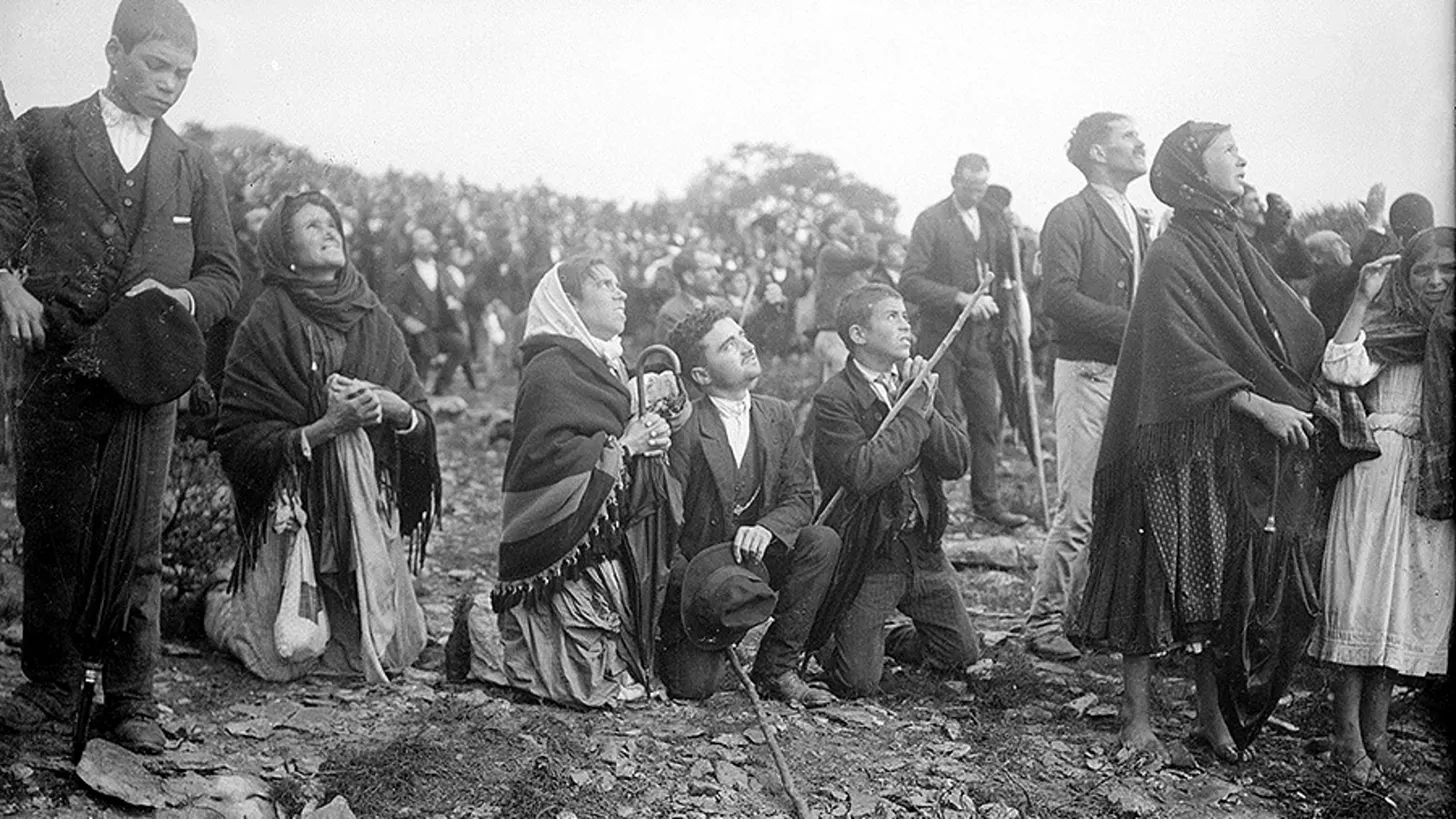
It had rained through the night. By midday on October 13, 1917, the fields of the Cova da Iria in Portugal were a miserable expanse of mud, soaked clothing, and thousands of people waiting for something that many of them doubted would ever happen.
Three shepherd children had promised a miracle.
Lucia dos Santos was ten years old. Her cousins, Francisco and Jacinta Marto, were nine and seven. Since May, they had reported apparitions of the Blessed Virgin Mary, who had entrusted them with terrible warnings concerning sin, war, hell, and the future of the world. In July, the Lady had promised that a great miracle would occur in October so that people might believe.
Estimates placed the crowd that gathered that Saturday between 50,000 and 70,000. There were devout Catholics, skeptics, journalists, curious townspeople, and others who had traveled considerable distances, some hoping for a miracle, others anticipating the public humiliation of three children.
Then the clouds broke.
According to numerous eyewitnesses, the sun appeared as a brilliant silver disc, spinning and casting extraordinary colors across the countryside. At moments it seemed to plunge toward the earth, terrifying people who thought the world was coming to an end. The phenomenon was reported by witnesses of different religious convictions, including Avelino de Almeida, writing for the Lisbon newspaper O Século.
His account appeared two days later, on October 15.
The newspaper’s remarkable headline described how the sun had danced at midday in Fatima.
The Church’s subsequent investigation would conclude in 1930 that the apparitions were worthy of belief. Yet the astonishing phenomenon of October 13 was only the visible confirmation of something far more consequential. Heaven had delivered a message, and that message placed the eternal salvation of souls above every earthly concern.
One hundred and nine years have passed. The world has endured another great war, communist revolutions, the persecution of Christians, the collapse of Catholic societies, and a crisis within the Church whose consequences remain before us.
The warning given in that Portuguese field deserves another hearing.
The Words That Should Terrify Every Bishop
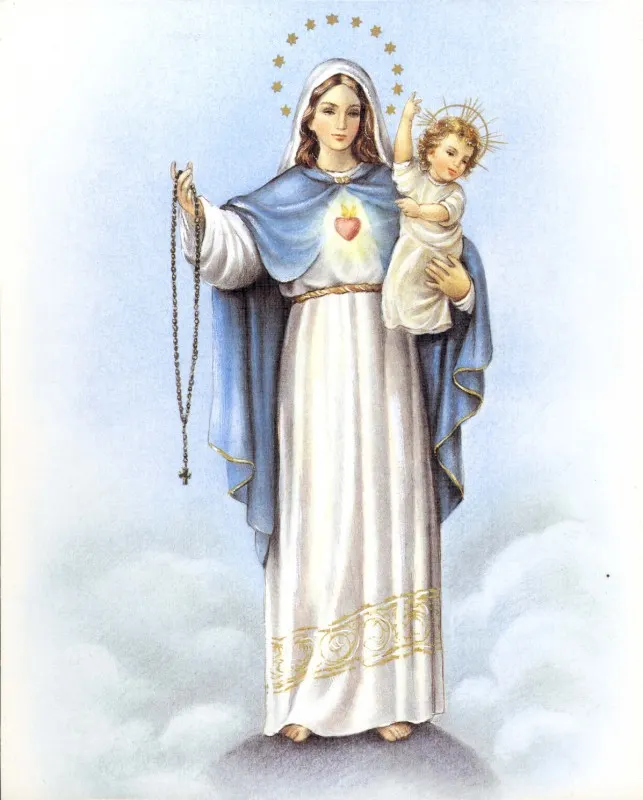
During the final apparition, Our Lady identified herself as the Lady of the Rosary. She requested the construction of a chapel and repeated her instruction that the Rosary be prayed daily.
Lucia asked about the healing of sick people and the conversion of sinners. Our Lady replied that some petitions would be granted, while others would be refused. Those seeking divine favors must amend their lives and ask forgiveness.
Then, according to Lucia’s account, the Blessed Virgin appeared sorrowful and spoke the words that ought to be engraved upon the conscience of every Catholic:
“Do not offend the Lord our God any more, because He is already so much offended!”
Consider what Our Lady chose to emphasize.
She had an audience that included tens of thousands of suffering people. Europe was being torn apart by the First World War. Portugal was experiencing political instability and fierce anticlericalism. The children themselves had endured intimidation and imprisonment.
Our Lady certainly knew of these sufferings. Yet her final public appeal concerned the offense given to Almighty God.
That matters enormously.
The modern ecclesiastical vocabulary is saturated with dialogue, accompaniment, listening, discernment, welcome, and inclusion. Some of those words have perfectly legitimate Catholic meanings. Every priest who hears confessions must listen, and every pastor should exercise genuine charity toward souls struggling with sin.
But Fatima places everything in its proper order. Charity seeks the conversion of the sinner. Mercy presupposes the reality of sin. Pastoral concern becomes a cruel deception when it leaves a person comfortable in circumstances that imperil his eternal salvation.
Our Lady brought no program for adapting Christianity to the sexual revolution, secular culture, or the expectations of modern society. She asked men to cease offending God.
The distinction is painfully relevant in 2026.
Our Lady of Mount Carmel: The Forgotten Part of October 13
There is another extraordinary aspect of the final apparition that deserves much greater attention.
Following the appearance of Our Lady of the Rosary, Lucia reported a series of visions near the sun.
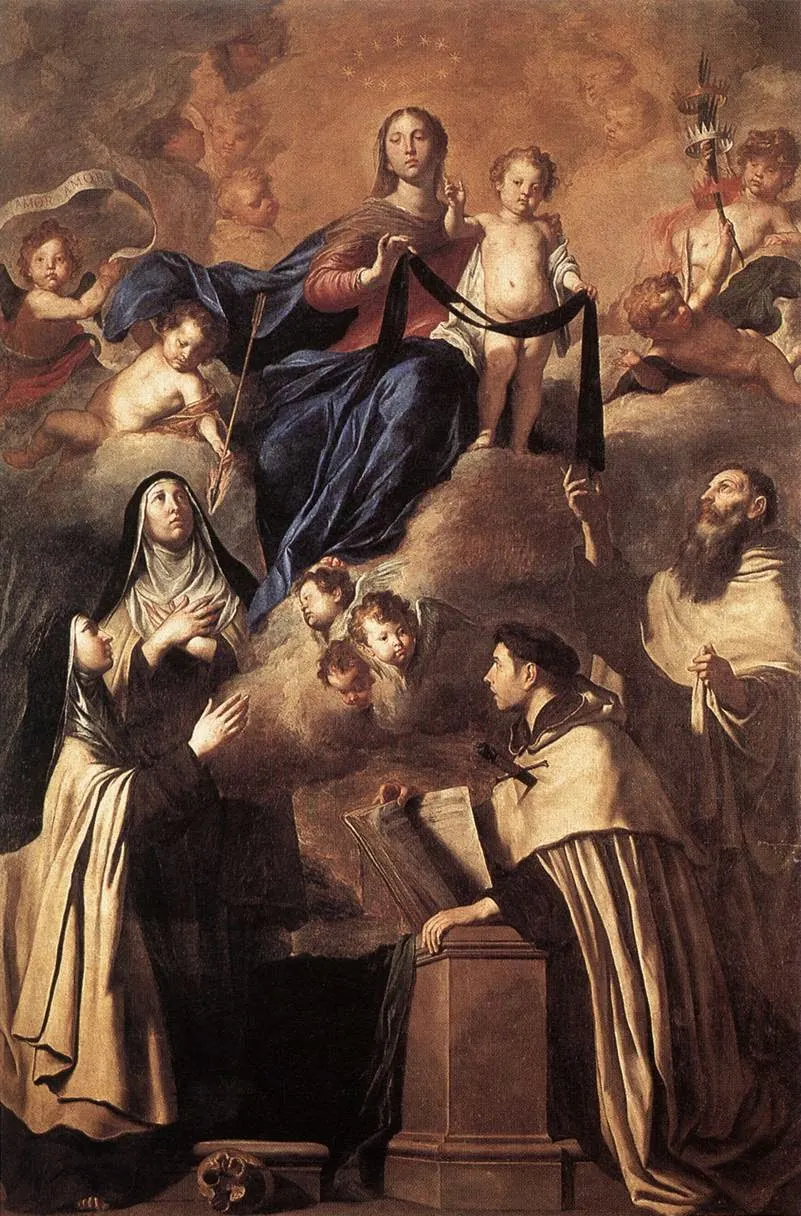
She saw St. Joseph with the Child Jesus, blessing the world. Then came a vision of Our Lord and Our Lady of Sorrows. Finally, the Blessed Virgin appeared in the likeness of Our Lady of Mount Carmel.
The sequence is fascinating.
St. Joseph and the Divine Child call to mind the Holy Family, the sacred institution now being discussed at Leo’s synodal gathering.
Our Lady of Sorrows directs us toward Calvary, sacrifice, and redemption.
And Our Lady of Mount Carmel recalls the Brown Scapular, that venerable sacramental associated with consecration to the Blessed Virgin and perseverance in the Christian life.
In accounts of conversations with Carmelite priests around 1950, Sister Lucia emphasized the importance of the Scapular. She is widely reported to have explained to Father Howard Rafferty that Our Lady wished people to wear it, and that the Rosary and Scapular were inseparable.
The precise wording of these later conversations is transmitted through devotional accounts, but the apparition of Our Lady of Mount Carmel itself is documented in Lucia’s memoirs.
The spiritual connection is easy to understand.
The Rosary places the mysteries of Christ’s life before our minds. The Scapular recalls our belonging to Our Lady and our obligation to live faithfully beneath her maternal protection. Both devotions direct us toward her Divine Son.
The Brown Scapular is no magical charm. A Catholic cannot presume upon salvation while deliberately refusing repentance and the commandments. Our Lady’s protection calls for corresponding fidelity.
There is something deeply Catholic about that little piece of brown cloth.
It makes no demand upon the attention of the world. Beneath a man’s shirt, or a woman’s dress, it silently recalls promises that might otherwise be forgotten amid work, temptations, family troubles, and the thousand little compromises of daily life.
The Catholic who wears it should remember that he belongs to Our Lady.
And belonging to Our Lady means striving to belong more perfectly to Christ.
The Third Secret and the Eclipse of Catholic Certainty
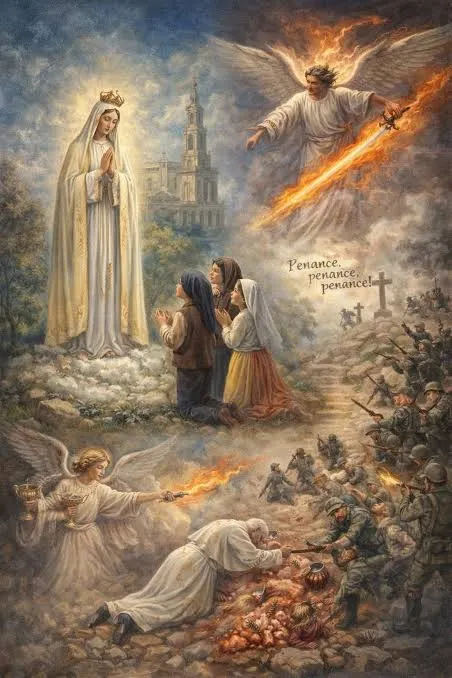
No consideration of Fatima and the contemporary Church crisis would be complete without addressing the Third Secret.
In June 2000, the Vatican published what it identified as the third part of the secret entrusted to the children.
The vision describes an angel holding a flaming sword, an exhortation to penance, a bishop dressed in white, a ruined city, suffering clergy and religious, and martyrs killed upon a mountain.
The accompanying theological commentary interpreted the vision principally in relation to twentieth-century persecution and suffering within the Church.
Traditional Catholics have questioned whether the disclosure and its official interpretation adequately explain every aspect of the Fatima message. Some have proposed that additional explanatory words remain undisclosed.
Yet even the officially published material provides abundant grounds for alarm.
The Fatima message speaks of hell, widespread error, persecution, martyrdom, and the need for repentance. Its imagery portrays suffering that reaches into the ecclesiastical hierarchy itself.
In our generation, serious questions have arisen about the continuity of Catholic teaching, the treatment of the traditional liturgy, religious indifferentism, the meaning of papal authority, and the limits of obedience when ecclesiastical commands appear to conflict with the inherited Faith.
The problem reaches deeper than a dispute over the temperament or governing preferences of Francis and Leo.
It concerns the relationship between the visible exercise of authority and the unchanging deposit of divine Revelation.
The old Catholic principle remains indispensable: the Church receives the Faith from Christ and transmits it faithfully. No pontificate acquires the authority to reinvent what God has revealed.
The saints understood this.
The faithful must understand it again.
The Errors of Russia and the Modern Ecclesiastical Mind
Our Lady’s warning about Russia is frequently interpreted in narrowly geopolitical terms. Certainly, communist expansion, revolution, atheistic persecution, and the destruction of Christian societies belong at the center of its historical significance.
But the errors associated with revolutionary communism also involved a direct assault upon the natural and supernatural order.
The repudiation of divine authority, the subordination of religious truth to human institutions, the destruction of the Christian family, and the belief that mankind could reconstruct society according to an ideological program have left consequences extending far beyond the former Soviet Union.
Those intellectual habits have penetrated nearly every institution in Western civilization.
The Catholic Church cannot escape their influence merely because men wear episcopal vestments or speak from ecclesiastical offices.
Whenever revealed truth is treated as an obstacle to contemporary expectations, a revolutionary impulse has entered theological thinking. When moral doctrine is quietly subordinated to experience, the method resembles the assumptions that produced the modern world’s rebellion against Christian civilization.
The resemblance does not establish that every questionable pastoral initiative is communist in origin. It does suggest that the crisis Fatima anticipated involved much more than tanks, secret police, and international borders.
The battle over the Christian understanding of man is also a battle over the authority of God.
And this is why Our Lady’s warning about sin has lost none of its force.
A Century of Warnings, and the Triumph Yet to Come
It would be easy to contemplate the state of the Church and descend into bitterness.
Many traditional Catholics have watched their churches close, their chapels endure restrictions, and their priests receive treatment that seems inexplicable when compared with the tolerance extended to theological experimentation elsewhere.
Some have spent decades searching for a stable place to hear the traditional Mass, receive the sacraments, and raise their children in the Faith of their ancestors. The ecclesiastical confusion has wounded families. It has left sincere Catholics wondering whom they can trust.
Fatima offers a far greater horizon than the ecclesiastical controversies of any particular year.
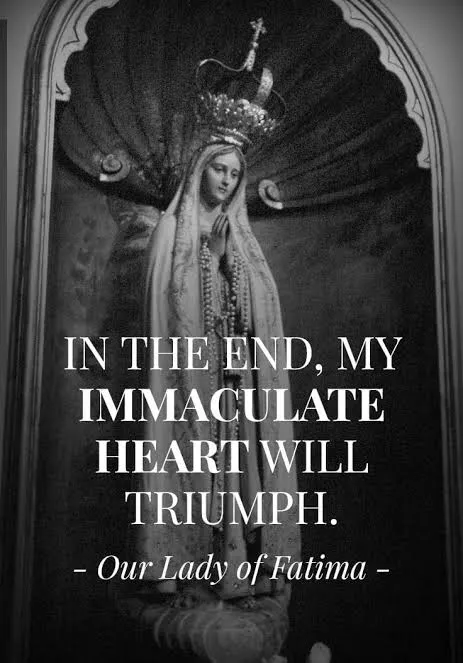
In the message of July 13, Our Lady gave a promise whose significance cannot be exhausted by the politics of the twentieth century:
“In the end, my Immaculate Heart will triumph.”
Notice where the promise directs our attention.
The triumph belongs to the Immaculate Heart of Mary, entirely united to the will of her Divine Son. Our Lady gives us reason for hope amid conditions that often appear hopeless.
The promise also presupposes a struggle. Triumph follows conflict, and the Christian’s participation in that conflict begins with the duties of his own state of life.
A Catholic father who leads his family in the daily Rosary is doing something of immense supernatural importance. So is a young woman who rejects an occasion of sin, a priest who refuses to compromise the sacramental seal or the moral law, and a penitent who returns to confession after years away from grace.
Such victories rarely attract attention.
They may nevertheless matter more for eternity than another episcopal conference, another ecclesiastical press release, or another carefully negotiated formula designed to keep irreconcilable theological positions under the same roof.
Our Lady asked for the daily Rosary, sacrifices for sinners, devotion to her Immaculate Heart, and the Communion of reparation on the First Saturdays. Catholics should rediscover these practices with seriousness, together with frequent confession, worthy reception of Holy Communion, and fidelity to the traditional moral and sacramental life of the Church.
Those who have never been enrolled in the Brown Scapular might consider approaching a faithful priest for enrollment and instruction in its obligations and privileges.
And perhaps we should pray especially for the bishops, priests, and other ecclesiastical authorities whose decisions affect so many souls. Their responsibility before God is immense.
Leo himself deserves prayers for his conversion of heart wherever correction is needed, for courage in defending the Faith, and for the grace to exercise authority in genuine fidelity to Catholic Tradition.
The crisis has endured for decades. We cannot calculate its eventual resolution, nor should we pretend to know precisely how Our Lady’s promise will be fulfilled.
But we can remain faithful today.
On October 13, 1917, tens of thousands of people stood in a muddy Portuguese field and watched something they could scarcely comprehend. The sun appeared to tremble before their eyes. Some fell to their knees, frightened by the spectacle unfolding above them.
Yet the words spoken to three children have outlasted the astonishment of that afternoon.
God is offended by sin. Souls are in danger. Penance is necessary. The Rosary must be prayed. The Immaculate Heart will triumph.
One hundred and nine years later, with the Church again passing through a period of extraordinary trial, those words remain sufficient to direct our spiritual lives.
May Our Lady of Fatima obtain for us the courage to persevere in the Catholic Faith, whatever confusion may surround us, and the grace to be found among those who love and serve her Divine Son when her promised triumph comes.
Our Lady of the Rosary of Fatima, pray for us.
Our Lady of Mount Carmel, pray for us.
Immaculate Heart of Mary, be our salvation.
"So let us be confident, let us not be unprepared, let us not be outflanked, let us be wise, vigilant, fighting against those who are trying to tear the faith out of our souls and morality out of our hearts, so that we may remain Catholics, remain united to the Blessed Virgin Mary, remain united to the Roman Catholic Church, remain faithful children of the Church."- Abp. Lefebvre